
Distressed Property in Dubai Sports City
Dubai Sports City is the stadium district of Dubailand — a privately developed, sports-anchored community that became an affordable buy-to-let heartland. It also carries Dubai's most documented post-2008 distress legacy, and that history still shapes why below-market deals surface here.
Content reviewed 2026-10-03 · How price comparisons work
- Historical completed-apartment median
- AED 908 / sqft
- Apartment sales in the 90 days to 2026-04-09
- 306
- Historical data cutoff
- 2026-04-09
Median price and 90-day transaction count from DLD Real Estate Transactions open data via Dubai Pulse — 12-month window for the median, 90-day window for the count, both ending 2026-04-09. Filters: Dubai Sports City master project / Sales of Existing Properties / Flat (apartments) / 5% top-and-bottom outlier trim.
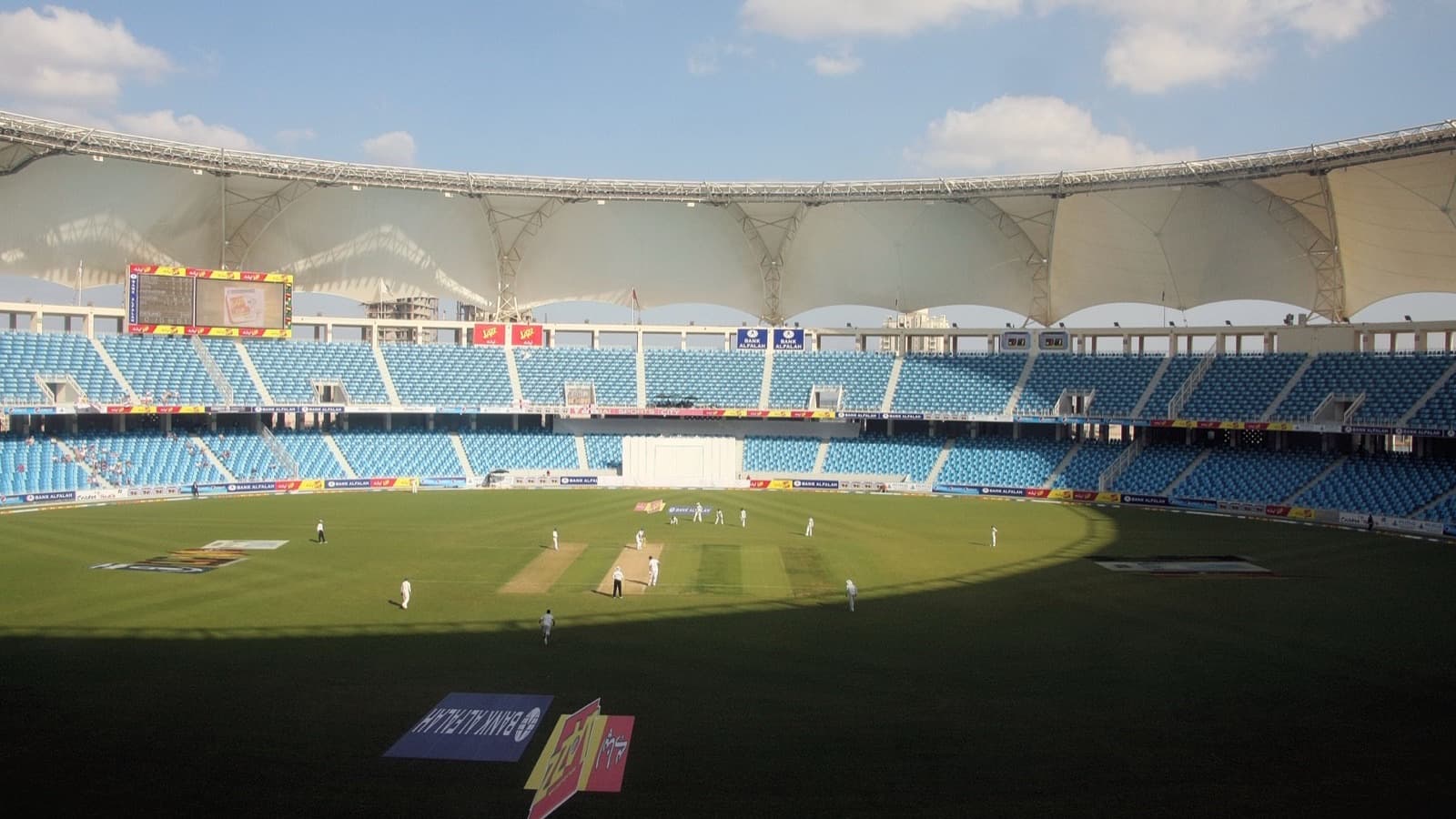
Dubai Sports City launched in 2004 as a roughly US$4 billion, 50-million-square-foot sports-themed district within Dubailand, developed by private partners including the Falaknaz Group, along Sheikh Mohammed Bin Zayed Road. Its anchors are genuinely unusual for a residential area: the 25,000-seat Dubai International Cricket Stadium (which hosted its first one-day international in 2009), the ICC Academy, and The Els Club — Ernie Els' first golf course in the Middle East. Around them sit three residential districts — the Canal Residence towers, Victory Heights with nearly a thousand villas and townhouses, and Gallery Villas — though the stock that actually trades day-to-day is overwhelmingly apartments.
The area's history is central to its pricing. First residential deliveries were planned for 2007 and the area opened in 2008 — directly into the global crash. Reporting from The National documented the aftermath: towers sold off-plan for 2009 delivery that stalled for years (Champions Tower 3, Oasis 1, Bermuda Views), buyer default rates reaching roughly half on some projects, and The Cube cancelled outright, its plot later relaunched as a new development. Property databases were still tracking over a dozen on-hold buildings and vacant unstarted plots more than a decade later. The market that emerged from that history is an affordable investor's market: Bayut's 2025 report ranked Sports City the third most popular area for affordable apartment purchases, with an 8.76% apartment yield and an average transaction near AED 699,000.
Those two facts — legacy stock and landlord ownership — are why below-market inventory is structural here. First-wave buildings delivered around 2008 now compete with newer towers inside the same community, creating a built-in below-original-price band. Small-ticket landlords exit on math when cash flow changes. And the competitive pressure is rising: Jumeirah Village Circle, an immediate neighbour, expects roughly 35,000 new homes — about a tenth of Dubai's future supply — with named analysts projecting flattening or even correcting prices in that belt by 2027–28. Add the verifiable frictions buyers price against — no metro service and documented match-day congestion around the stadium — and Sports City sellers who need out must price visibly below to move. None of this signals a broken market: DLD feeds show transactions clearing daily.
Why distressed inventory shows up in Sports City
- A documented post-2008 legacy: stalled and cancelled towers, buyer defaults and buildings on hold left motivated sellers and pricing gaps.
- First-wave buildings delivered from around 2008 compete with newer towers in the same community — a built-in below-original-price band.
- Buy-to-let heartland: 2025's #3 affordable-apartment area with ~8.8% yields — small-ticket landlords exit fast when the math changes.
- JVC next door expects roughly 35,000 new homes — about a tenth of Dubai's pipeline — capping what Sports City sellers can ask.
- Car-dependent (no metro) with documented match-day congestion around the 25,000-seat stadium — real frictions buyers price against.
- Build-out is still incomplete — on-hold buildings and vacant plots mean ready units near frozen or active sites trade at discounts.
Current distressed listings in Sports City
See all in Sports City →No active distressed listings in Sports City right now.
New inventory lands frequently. Add the page to your bookmarks, or post a property below if you're selling.
Browse all UAE distressed listingsAdjacent areas
Price registers by building in Sports City
The table above is the district. These are individual towers — what units in each one actually sold for, by bedroom count, straight from the Land Department register. It is the level an offer is actually made at.
Not every cheap Sports City listing is a genuine deal. Some prices reflect a building's delivery history, its service record, or what the view will be for the next few years. The discipline is the same as everywhere on this platform: pull recent DLD-sold prices for the same layout in the same building, understand the building's history and management, and separate a true below-market price from a unit the market is repricing for a reason.
For the prepared buyer, the setup is favourable. Sports City combines small tickets, honest yields, sellers accustomed to negotiation, and daily transaction flow that keeps comparable evidence fresh. Buyers who verify fast and close cleanly hold real leverage here — especially against a landlord whose numbers stopped working.
Frequently asked about Sports City
Why are there below-market deals in Dubai Sports City?
Four structural reasons. The area carries a documented post-2008 legacy — stalled towers, buyer defaults and cancelled projects — that left pricing gaps and sellers accustomed to negotiating. First-wave buildings from around 2008 compete against newer towers inside the same community, so older stock naturally prices below. Ownership is dominated by small-ticket, yield-driven landlords who exit on math. And the affordable belt around it is absorbing enormous new supply — neighbouring JVC alone expects roughly 35,000 homes — which caps asking prices across the area.
What happened to the stalled Sports City projects — is that risk over?
The crash-era stall is well documented: The National reported towers due in 2009 that sat unfinished for years — Champions Tower 3, Oasis 1, Bermuda Views — with buyer defaults reaching roughly half on some projects, and The Cube was cancelled outright, its plot later relaunched. Most of the area has long since delivered and trades normally, but property databases still track on-hold buildings and vacant plots. The practical takeaway for a buyer: check the specific building's delivery history and the status of neighbouring plots before you price a unit, not the area's averages.
Is Dubai Sports City a good buy-to-let investment?
The 2025 numbers make the case: Bayut's annual report ranked it Dubai's third most popular affordable-apartment area, with an 8.76% apartment yield and an average transaction near AED 699,000 — small tickets with honest cash flow, and a tenant base of families and young professionals. The caveats are the same ones that create the deals: building-quality variance, no metro service, and heavy new supply in the surrounding belt, which favours buying below market rather than at it.
What discount should I expect in Dubai Sports City?
We do not publish an area-wide distressed discount estimate for Sports City. Assess each asking price against suitable evidence and total costs. A price below an area median or the seller's original purchase price does not by itself establish current market value.
What should I check before buying a cheap Sports City apartment?
Five things. The building's biography — when it was promised versus when it delivered, and by whom. The status of neighbouring plots, because a frozen site next door belongs in your price. The service-charge history and how the building is actually maintained. Same-building sold comparables from the last 90 days. And the practical realities: match-day traffic around the stadium and the car-dependence of a metro-less district — frictions that are your leverage going in and your buyer's leverage when you exit.
Looking beyond Sports City?
Explore other Dubai communities, available listings and buying checks in our Dubai property guide.
Distressed property for sale in Dubai →