
Distressed Property in International City
International City is Dubai's budget freehold heartland — more than 22,000 Nakheel-built studios and one-bedroom apartments in ten country-themed clusters, trading at some of the lowest prices of any major freehold district. Aging stock, landlord-dominated ownership and newer budget supply next door are why below-market listings keep surfacing here.
Content reviewed 2026-10-03 · How price comparisons work
- Historical completed-apartment median
- AED 638 / sqft
- Apartment sales in the 90 days to 2026-04-09
- 310
- Historical data cutoff
- 2026-04-09
Median price and 90-day transaction count from DLD Real Estate Transactions open data via Dubai Pulse — 12-month window for the median, 90-day window for the count, both ending 2026-04-09. Filters: International City Phase 1 master project (the original country-cluster development) / Sales of Existing Properties / Flat (apartments) / 5% top-and-bottom outlier trim.
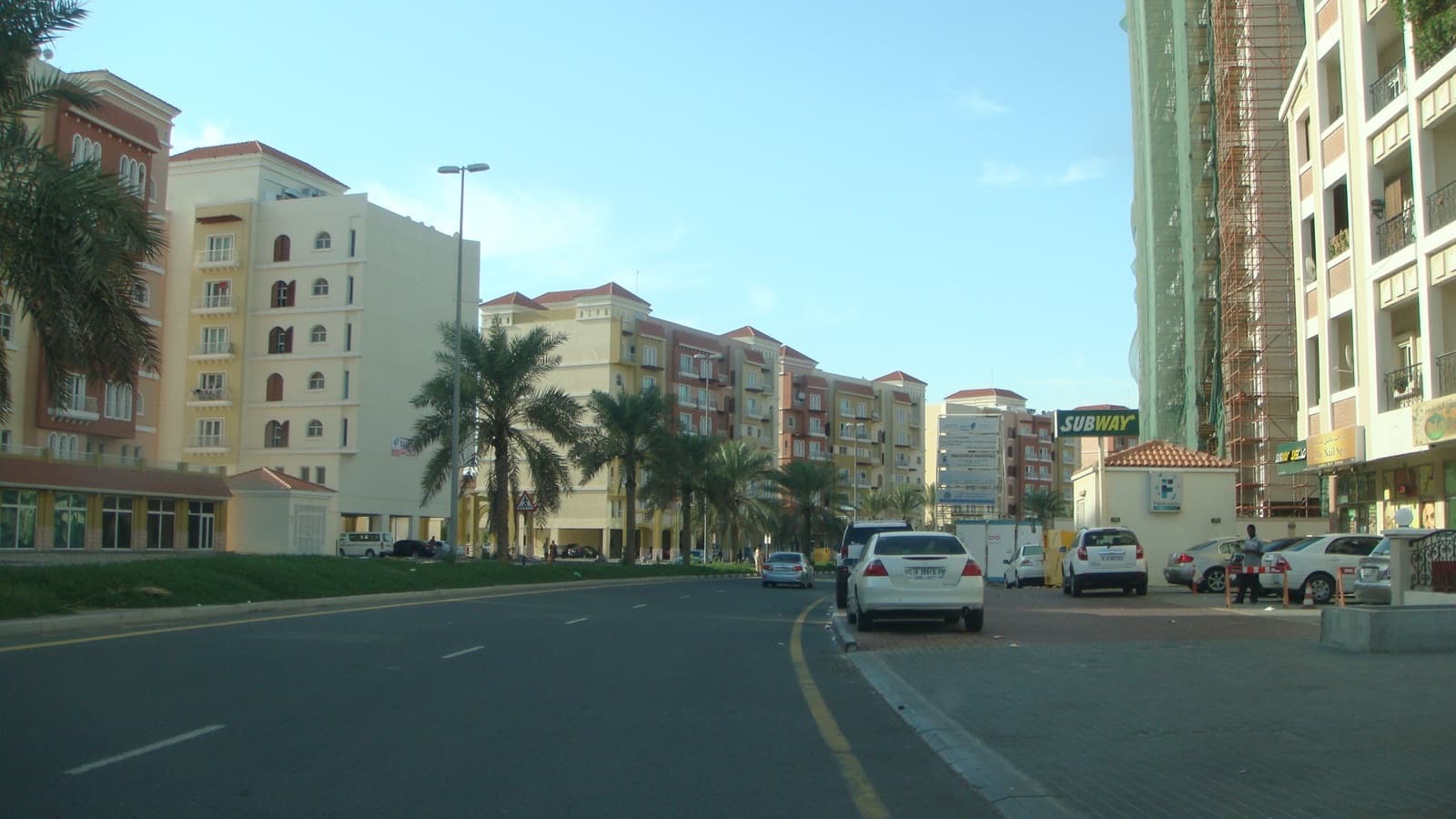
International City is a Nakheel master community launched in 2002 in Al Warsan, along Sheikh Mohammed Bin Zayed Road opposite the Dubai Central Fruit and Vegetable Market. Across roughly 800 hectares, its core is ten country-themed clusters — China, England, France, Greece, Italy, Morocco, Persia, Russia, Spain and the Emirates — of low-rise, four-storey buildings, plus a Central Business District with larger, better-amenitized blocks, all next to the Dragon Mart retail complex. The first buildings handed over in late 2006, with the bulk of the clusters following through 2007 — making this some of the oldest budget freehold stock in Dubai.
It is also some of the cheapest and highest-yielding. International City consistently ranks among Dubai's very cheapest freehold apartment districts, with 2025 market reports putting its affordable-apartment rental yields at the top of the entire segment — roughly 8–10%, with Bayut's 2025 report citing 10.3%. Entry tickets are small — dubizzle's 2025 guide put the average studio near AED 428,000 — and the district trades constantly, with DLD-based analyses counting over two thousand sales in 2025. Thousands of near-identical units mean the comparable evidence is deep and transparent.
That structure is exactly what produces below-market inventory. Ownership is dominated by yield-focused landlords who sell on math, not emotion, the moment cash flow or portfolio priorities change. A nearly two-decades-old unit must undercut renovated neighbours to move, and buyers can negotiate against documented area frictions — parking pressure severe enough that paid parking arrived in February 2026, congested access roads, and reported night-time odour episodes from the neighbouring Al Aweer treatment plant. Meanwhile, newer budget supply in International City Phase 2 (Warsan 4), Liwan and the Dubailand Residence Complex caps what Phase 1 stock can ask — and the Metro Blue Line, opening September 2029 with stations serving International City 1 and 2, gives a dated catalyst for the patient buyer.
Why distressed inventory shows up in International City
- Nearly two decades old: the core clusters handed over from late 2006 through 2007, so tired units must undercut renovated neighbours to move.
- Thousands of near-identical studios and one-beds — any seller who needs speed must price below a deep, transparent comparable set.
- Landlord territory: the top-yielding affordable district in 2025 reports — investors exit on math, not emotion, when cash flow changes.
- Newer budget supply next door — International City Phase 2, Liwan and Dubailand Residence Complex — caps what Phase 1 stock can ask.
- Documented frictions to negotiate against: parking pressure (paid parking from Feb 2026), congested access roads, odour episodes.
- Small tickets and constant trading mean below-market listings appear often — and clear fast when they are priced right.
Current distressed listings in International City
See all in International City →No active distressed listings in International City right now.
New inventory lands frequently. Add the page to your bookmarks, or post a property below if you're selling.
Browse all UAE distressed listingsPrice registers by building in International City
The table above is the district. These are individual towers — what units in each one actually sold for, by bedroom count, straight from the Land Department register. It is the level an offer is actually made at.
Developed by Nakheel Properties
How Nakheel's track record, handover reliability and payment-plan structure shape where its below-market and below-OP resales show up.
Not every cheap International City listing is a genuine deal — some prices reflect a building's condition or a landlord testing the market. The discipline is unchanged: pull recent DLD-sold prices for the same layout in the same cluster, inspect how the specific building is maintained, verify the actual rent and service charges behind the yield story, and separate a true below-market price from a unit the market is repricing for a reason.
The reward for that discipline is real. International City is liquid, transparent and cheap enough that small dirham discounts are large in percentage terms — and a buyer who can verify quickly and close cleanly holds genuine leverage over a landlord who has already decided to leave.
Frequently asked about International City
Why are there so many below-market deals in International City?
Four forces stack up. The core stock is nearly two decades old — handed over from late 2006 through 2007 — so unrenovated units must undercut fresher neighbours to sell. Ownership is dominated by yield-driven landlords, who exit quickly and price sharply when their numbers change. Newer budget supply next door — International City Phase 2, Liwan and the Dubailand Residence Complex — caps what Phase 1 sellers can ask. And with thousands of near-identical units trading constantly, any seller who needs speed must price visibly below a deep comparable set, which is precisely what a distressed listing looks like.
Is International City freehold, and can foreigners buy there?
Yes — International City is an established freehold district, and it is one of the cheapest freehold entry points in Dubai. dubizzle's 2025 affordable-buying guide put the average studio near AED 428,000 and ranked it the top affordable area to buy apartments. Title transfers work exactly as elsewhere in Dubai's freehold market, which is one reason the district trades in such volume.
Is International City a good investment despite the low prices?
The yield math is the strongest in Dubai's affordable segment: 2025 market reports put affordable-apartment yields around 8–10%, with Bayut's 2025 report citing 10.3% — the highest in the segment. The Metro Blue Line, scheduled to open in September 2029 with stations serving International City 1 and 2, adds a dated infrastructure catalyst for currently bus-only stock. The caveats are building-specific: an aging tower with weak maintenance can absorb years of yield in repairs and resale discount, so the building check matters more than the area thesis.
What discount should I expect in International City?
We do not publish an area-wide distressed discount estimate for International City. Assess each asking price against suitable evidence and total costs. A price below an area median or the seller's original purchase price does not by itself establish current market value.
What should I check before buying a cheap International City apartment?
Five things. The specific building's maintenance record and service-charge position — condition variance between buildings is the district's biggest pricing factor. Same-cluster sold comparables from the last 90 days, not asking prices. The real rent the unit achieves, so the yield story is fact rather than brochure. The practical frictions — parking arrangements (paid parking arrived in February 2026) and access-road congestion at peak hours. And the seller's situation: a landlord closing a position negotiates very differently from one testing the market.
Looking beyond International City?
Explore other Dubai communities, available listings and buying checks in our Dubai property guide.
Distressed property for sale in Dubai →