
Distressed Property in Jumeirah Beach Residence (JBR)
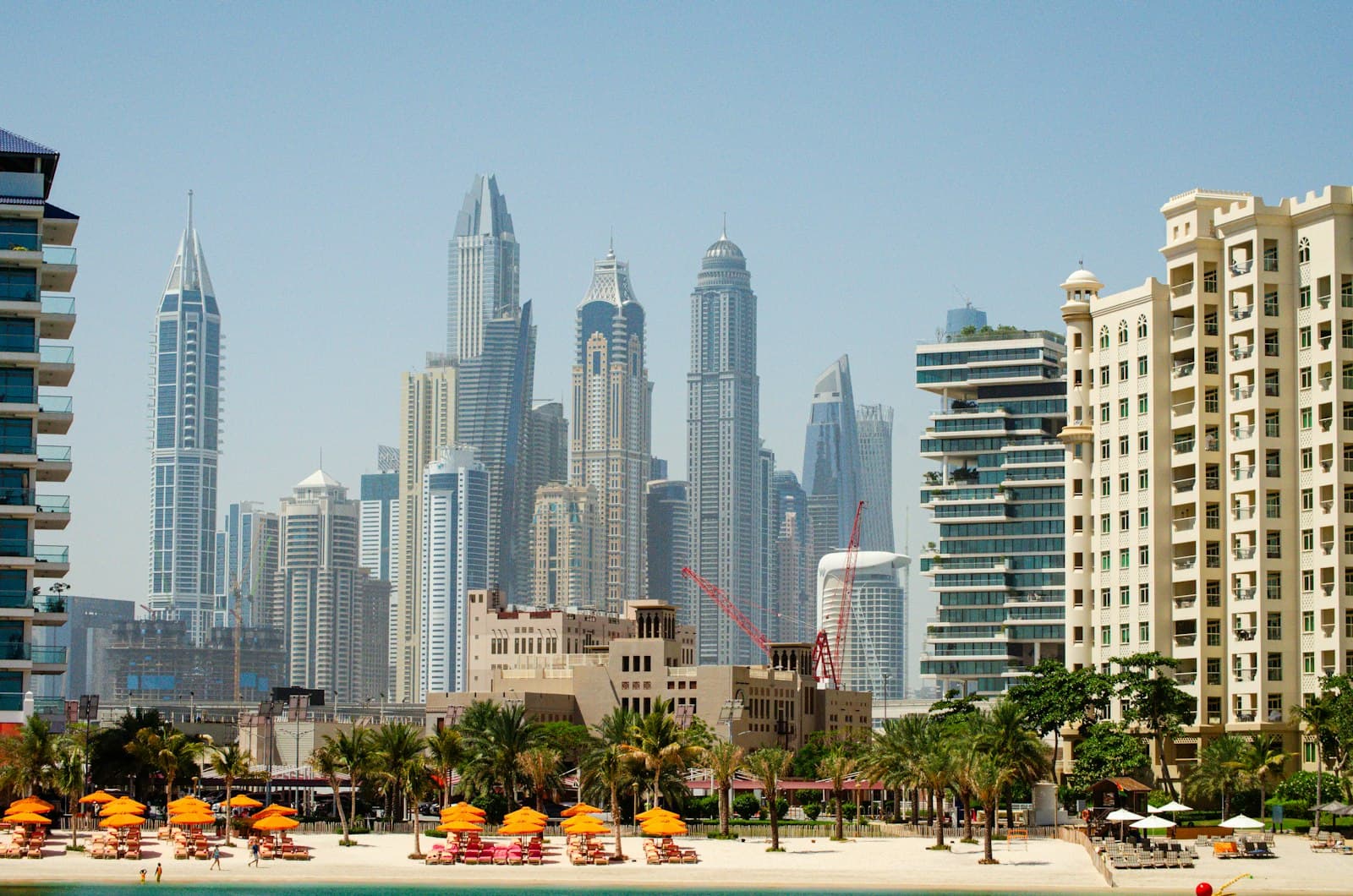
Jumeirah Beach Residence is a 35-residential-tower cluster on a 1.7 km stretch of Dubai beachfront, handed over in a single compressed wave between March 2007 and late 2008. That synchronous age profile is why the distress signal in JBR looks fundamentally different from Marina's.
Content reviewed 2026-10-03 · How price comparisons work
- Historical completed-apartment median
- AED 1,684 / sqft
- Apartment sales in the 90 days to 2026-04-09
- 114
- Historical data cutoff
- 2026-04-09
Median price and 90-day transaction count from DLD Real Estate Transactions open data via Dubai Pulse — 12-month window for the median, 90-day window for the count, both ending 2026-04-09. Filters: Marsa Dubai area / Jumeirah Beach Residence (JBR) master project / Sales of Existing Properties / Unit + Flat / 5% top-and-bottom outlier trim.
Jumeirah Beach Residence — JBR — is a 35-residential-tower cluster (plus 5 hotels) along a 1.7 km stretch of true Dubai beachfront, master-developed by Dubai Properties under Dubai Holding. Construction was launched in August 2002; first towers handed over in March 2007 with the bulk of residential handovers complete by late 2008. The whole development cost AED 6 billion and houses about 15,000 people across roughly 6,900 apartments, organised into six named clusters — Shams, Amwaj, Rimal, Bahar, Sadaf, Murjan — running west to east.
The structural distress story in JBR is single-cohort aging. Unlike Marina's two-wave handover pattern, every JBR residential tower is 18 to 19 years old simultaneously in 2026. Service-charge escalation as deferred maintenance catches up doesn't hit one cohort; it hits all 35 towers at the same time. Owners who didn't budget for the mid-life catch-up bill — common-area lifecycle replacement, façade work, lift refurbishment, MEP equipment end-of-life — exit before the assessment lands rather than absorb it.
Layer in the unit-size profile. JBR apartments are larger on average than Marina's — median around 1,420 sqft vs Marina's 1,050, with a 2-bedroom-heavy mix where Marina runs 1-bedroom-heavy. Higher absolute purchase prices (median sale around AED 2.6 million vs Marina's AED 2.0 million) translate into bigger mortgages, even though per-sqft pricing in JBR runs slightly below Marina. When 2024–2025 rates moved against owners who paid those absolute prices during the 2014–2017 cycle on 75/25 financing, the rate-hike pain hits the bigger monthly bill. JBR is also more owner-occupier than Marina — when end-user owners hit a forced exit (relocation, family change, retirement, expat departure), the sale becomes date-driven rather than price-maximising. All three pressures meet on the same square kilometre.
Why distressed inventory shows up in JBR
- Single 21-month handover window (March 2007 to late 2008) means all 35 residential towers are 18–19 years old at the same time. Service-charge escalation hits the entire cluster simultaneously, not one cohort at a time.
- Six named clusters (Shams, Amwaj, Rimal, Bahar, Sadaf, Murjan) share one master developer and similar build quality, but tower-specific Owners' Association management varies. Quality of maintenance budgeting is the variable that decides which towers exit first.
- JBR units run larger on average (median around 1,420 sqft, 2-bedroom-heavy) than Marina's (median around 1,050 sqft, 1-bedroom-heavy), and absolute purchase prices are higher. Bigger mortgages mean owners feel 2024–2025 rate-hike pressure on a larger monthly bill — even though per-sqft pricing runs slightly below Marina.
- Higher owner-occupier mix vs Marina. End-user exits (relocation, family change, retirement) are date-driven rather than price-maximising — the seller needs to leave by a date, not optimise headline price.
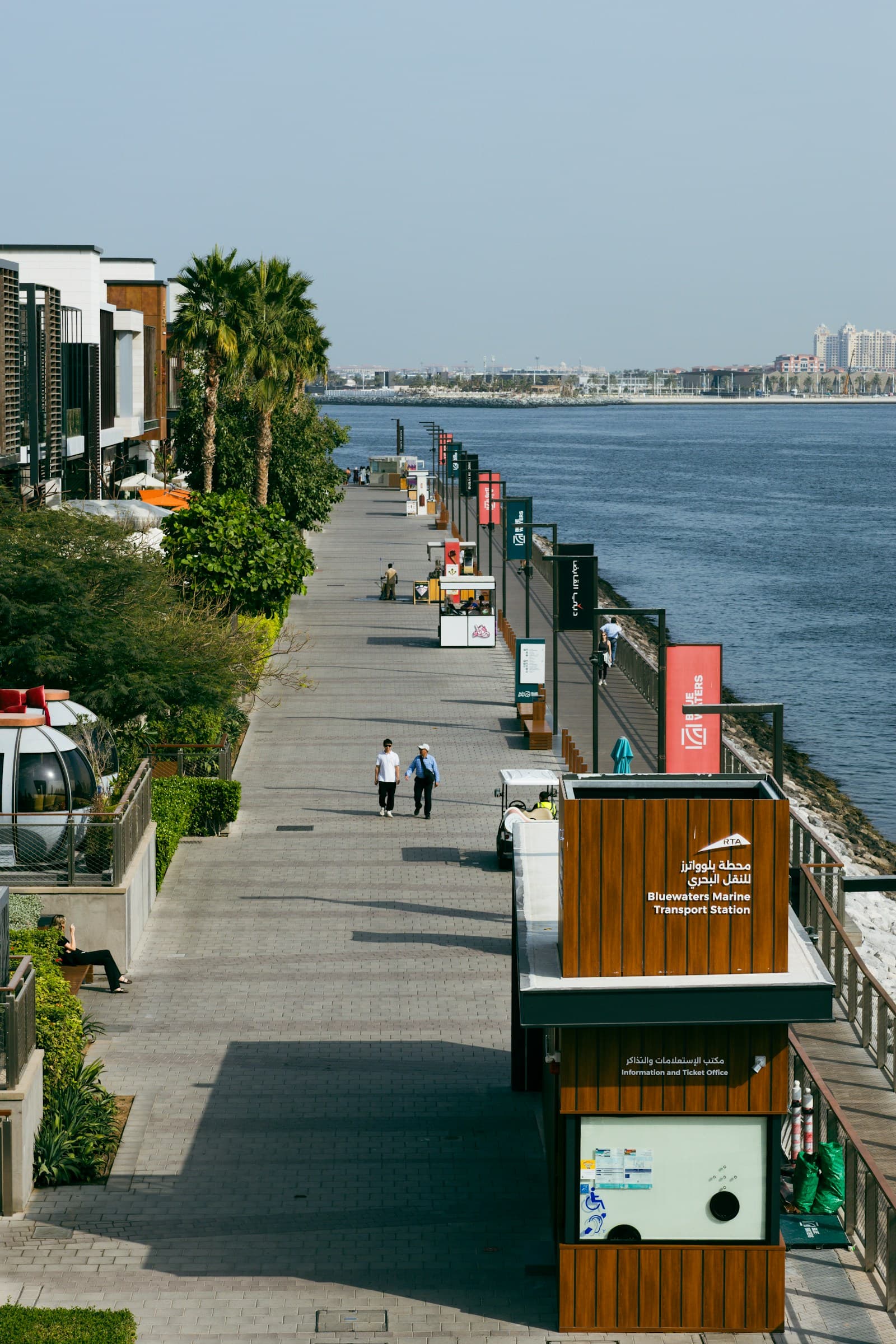
- Dubai Tram (JBR 1 and JBR 2 stations) plus The Walk's 300+ shops and dining outlets pull foot traffic and short-term-rental activity through the cluster. Common-area wear runs higher than purely residential towers, accelerating mid-life maintenance costs OAs have to fund.
- Visa-renewal triggers compress on JBR end-users because beachfront ownership often correlates with longer-term UAE residency plans. When those plans break — visa category change, employer move, family return abroad — the property has to clear.
Current distressed listings in JBR
See all in JBR →No active distressed listings in JBR right now.
New inventory lands frequently. Add the page to your bookmarks, or post a property below if you're selling.
Browse all UAE distressed listingsAdjacent areas
Price registers by building in JBR
The table above is the district. These are individual towers — what units in each one actually sold for, by bedroom count, straight from the Land Department register. It is the level an offer is actually made at.
Developed by Dubai Properties
How Dubai Properties's track record, handover reliability and payment-plan structure shape where its below-market and below-OP resales show up.
JBR is a tighter market than Marina — fewer towers, fewer comparable transactions per quarter, less seller pricing-power compression on volume alone. The discount in JBR is earned through situation reading rather than supply pressure: identifying the date-pressed seller, validating the OA reserve position, anchoring against the specific tower's last three same-line transactions rather than against asking.
Cash buyers with a 14-day close clear date-pressed JBR sellers' calculus more reliably than mortgage buyers offering deeper headline discounts — because the seller isn't optimising price, they're optimising for when the deal closes.

Frequently asked about JBR
What discount should I expect in Jumeirah Beach Residence (JBR)?
We do not publish an area-wide distressed discount estimate for JBR. Assess each asking price against suitable evidence and total costs. A price below an area median or the seller's original purchase price does not by itself establish current market value.
Which JBR towers carry the most distressed inventory?
Distressed inventory in JBR varies more by Owners' Association quality than by tower architecture — every cluster (Shams, Amwaj, Rimal, Bahar, Sadaf, Murjan) carries similar build quality, but tower-specific OA management diverges. Patterns we've watched: towers with visible audit issues or unfunded reserve funds see more pre-assessment exits; towers with cleaner OAs hold price discipline. Pull the last three OA audit statements before signing — that's the variable that matters in JBR.
Are JBR apartments good investments at distressed prices?
JBR's beachfront positioning supports rental yield in both long-term and short-term lets, and the 1.7 km Walk drives sustained foot traffic that few other Dubai areas match. But distressed JBR pricing reflects real costs: higher service charges, mid-life maintenance assessments coming due, and absolute purchase prices that mean any rate-hike impact lands on a bigger mortgage. We don't make investment recommendations — see the methodology page for what these numbers mean and what they don't.
Can I buy a Jumeirah Beach Residence (JBR) property with a mortgage?
Ask your lender to assess the specific property, your eligibility and the proposed timetable before committing. A ready property and an off-plan contract may require different arrangements. This page does not promise a loan, a deposit percentage or a completion time.
How do I verify a JBR listing is genuinely distressed?
Five JBR-specific checks. First, ask explicitly about the seller's exit date — date-pressed sellers will name one. Second, request the Owners' Association's last three audit reports plus the current reserve fund balance. Third, pull DLD-sold comparables for the same line in the same tower over the last 90 days. Fourth, check whether any recent OA assessment has been issued or is pending. Fifth, look for cash-buyer-preferred wording in the listing. All five align means real distress; none align means an aspirational seller.
Looking beyond JBR?
Explore other Dubai communities, available listings and buying checks in our Dubai property guide.
Distressed property for sale in Dubai →