
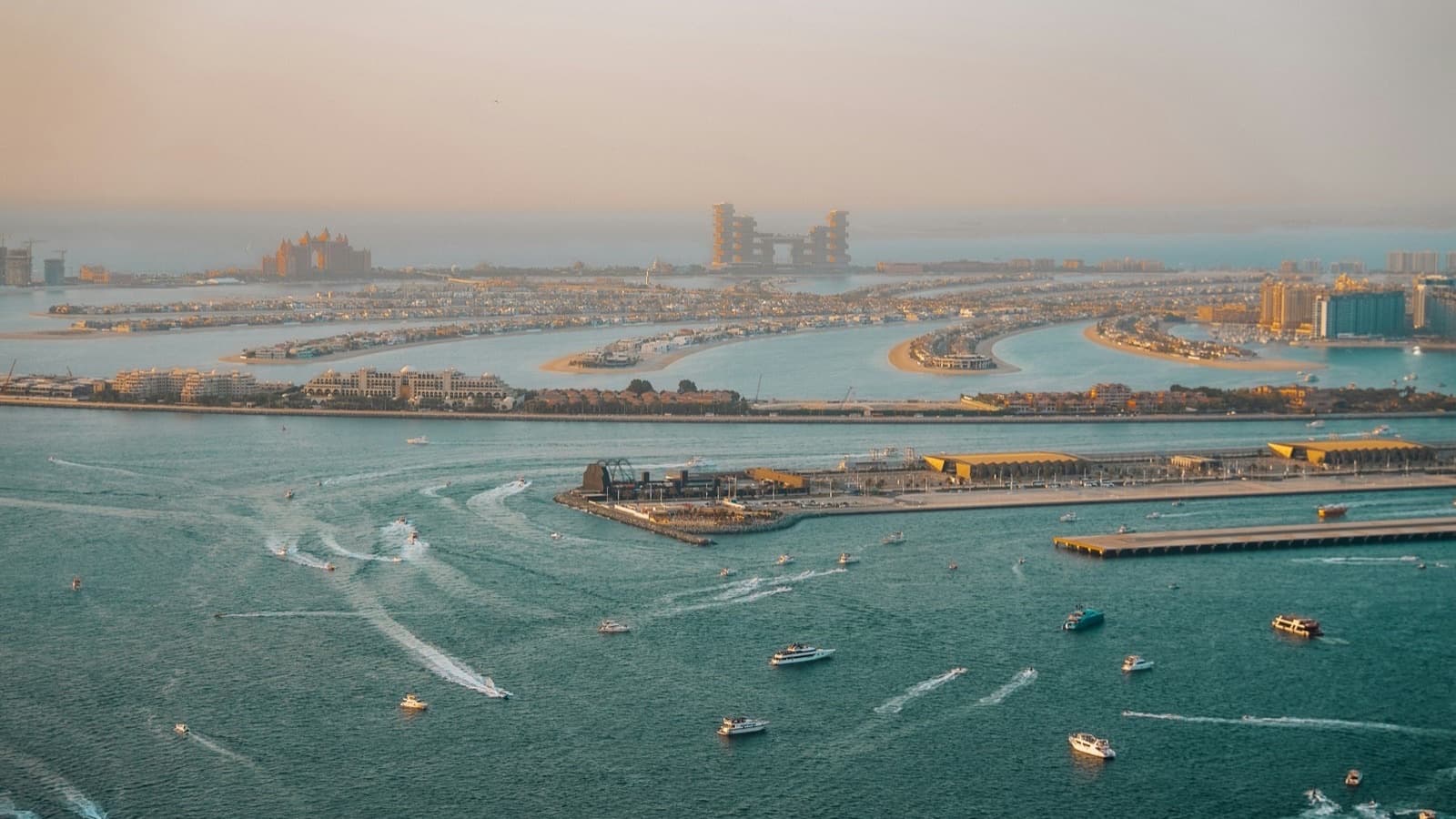
Distressed Property in Palm Jumeirah
Palm Jumeirah's apartment market is really two markets: the original Shoreline buildings on the trunk, now 17 to 20 years old and the island's value entry point, and a newer wave of ultra-branded residences. Below-market deals come from both — aging-stock carrying costs on one side, off-plan and ultra-prime holding-cost pressure on the other.
Content reviewed 2026-10-03 · How price comparisons work
- Historical completed-apartment median
- AED 2,653 / sqft
- Apartment sales in the 90 days to 2026-04-09
- 190
- Historical data cutoff
- 2026-04-09
Median price and 90-day transaction count from DLD Real Estate Transactions open data via Dubai Pulse — 12-month window for the median, 90-day window for the count, both ending 2026-04-09. Filters: Palm Jumeirah master project / Sales of Existing Properties / Flat (apartments) / 5% top-and-bottom outlier trim. The trim removes the ultra-prime branded tail, so the median reflects the mainstream trunk apartment market.
Palm Jumeirah is Nakheel's landmark man-made island, built from 2001 with the first homes handed over in 2006. Its apartments sit mainly on the trunk — led by the 20 Shoreline buildings (roughly 2,600 units handed over around 2006–2009) plus Golden Mile, Marina Residences, Tiara and Oceana — while villas occupy the fronds and newer branded residences line parts of the crescent. It is freehold and remains one of Dubai's most recognised addresses.
For apartments, the distress story splits in two. The older Shoreline and trunk stock is now 17–20 years old: dated unless renovated, carrying rising maintenance needs and service charges, and it is the cheapest way onto the Palm — which makes it a magnet for yield-seeking and short-let owners whose exits (a rate rise, a vacancy, a mortgage) surface as below-market listings. Well-run buildings with healthy reserve funds hold price; buildings facing a special assessment do not.
The newer, ultra-branded wave — recent completions handing over through 2026 and beyond — carries the opposite pressure: very high service charges and, on off-plan units, the same handover-payment and flip-exit dynamics seen across Dubai, in a thin ultra-prime buyer pool where a motivated seller has to discount to transact. It is worth being precise about the figure below: after trimming the top and bottom 5% of sales, the median reflects the mainstream trunk apartment market, not the ultra-prime branded tail.
Why distressed inventory shows up in Palm Jumeirah
- Older Shoreline and trunk stock is now 17–20 years old (handed over around 2006–2009): dated interiors and rising maintenance push owners to exit before a special assessment lands.
- High and variable service charges — modest on older Shoreline but far higher on branded towers — mean carrying cost pressures owners even on fully-paid units.
- The trunk apartments are the cheapest entry to the Palm, attracting leveraged yield-seekers and short-let operators whose exits (rate rises, vacancy) surface as below-market listings.
- On newer branded stock, off-plan handover exits and closed flip windows create motivated sellers, the same as other recent-handover Dubai communities.
- Ultra-prime units sit in a thin buyer pool, so a motivated seller at the top end must discount meaningfully to find a transaction.
Current distressed listings in Palm Jumeirah
See all in Palm Jumeirah →No active distressed listings in Palm Jumeirah right now.
New inventory lands frequently. Add the page to your bookmarks, or post a property below if you're selling.
Browse all UAE distressed listingsAdjacent areas
Price registers by building in Palm Jumeirah
The table above is the district. These are individual towers — what units in each one actually sold for, by bedroom count, straight from the Land Department register. It is the level an offer is actually made at.
Developed by Nakheel Properties
How Nakheel's track record, handover reliability and payment-plan structure shape where its below-market and below-OP resales show up.
The Palm rewards knowing which of its two apartment markets you're in. In the older trunk stock, the discipline is building condition and reserve-fund health — a genuine below-market price versus a unit priced for a coming repair bill. In the branded tier, it's carrying cost and, on off-plan, the seller's payment position. Anchor to same-building recent sales and underwrite the full annual cost, not just the sticker.
Motivated sellers on the Palm — an aging-building owner or a carrying-cost-pressed investor — usually value a clean, certain close over squeezing the last dirham. A fast, well-prepared buyer earns the discount that a slower, higher offer won't.
Frequently asked about Palm Jumeirah
Are the older Shoreline apartments (2006–2009) still a good buy, or is building age a risk?
They are the cheapest entry to the Palm and come with genuine beach access and a proven address — but at 17–20 years old, building condition is the whole game. Well-run Shoreline buildings with healthy reserve funds hold their value; those with deferred maintenance and an underfunded reserve face special assessments that erode any headline discount. Inspect the specific building, get its reserve-fund position, and treat renovation status as central to the price.
How high are service charges on Palm apartments?
They vary widely by building — modest on the older Shoreline stock and far higher on the newer branded towers. Because the range is so wide, always price the annual carrying cost of the specific building, not a Palm-wide average. On a larger unit the difference between an older and a branded building can run to tens of thousands of dirhams a year, which materially changes whether a 'discount' is actually a discount.
Why would an apartment on a prestige address like the Palm sell below market?
It is seller-driven, not address-driven. On the older trunk stock, aging buildings and rising carrying costs push owners — especially leveraged or short-let investors — to exit when cash flow tightens. On newer branded stock, off-plan handover payments and a thin ultra-prime resale pool create motivated sellers. In both cases the discount reflects the owner's situation, not a problem with the Palm itself — which is what makes these genuine below-market opportunities.
What discount should I expect in Palm Jumeirah?
We do not publish an area-wide distressed discount estimate for Palm Jumeirah. Assess each asking price against suitable evidence and total costs. A price below an area median or the seller's original purchase price does not by itself establish current market value.
What should I check before buying — reserve fund, assessments, rental pools?
Three things. First, the building's service-charge history and reserve-fund position — the single biggest driver of a genuine deal versus a hidden repair bill. Second, whether any special assessment is planned. Third, if the unit is branded or resort-linked, the rental-pool contract terms and any owner-use restrictions, which can limit both your income and your ability to sell cleanly later.
Looking beyond Palm Jumeirah?
Explore other Dubai communities, available listings and buying checks in our Dubai property guide.
Distressed property for sale in Dubai →