
Practical guide · Dubai
Heavy rain leaking into your rented apartment in Dubai? Who pays for repairs and damage?
Make the area safe, report the leak and record the damage. Your landlord is the starting point for repairs to the rented apartment, while building management may need to fix the roof, exterior or shared drainage. Compensation for your belongings is a separate question: the cause, responsibility and insurance cover matter.
This guide concerns Dubai residential tenancies within the Rental Disputes Center's jurisdiction. DIFC rules need separate advice.
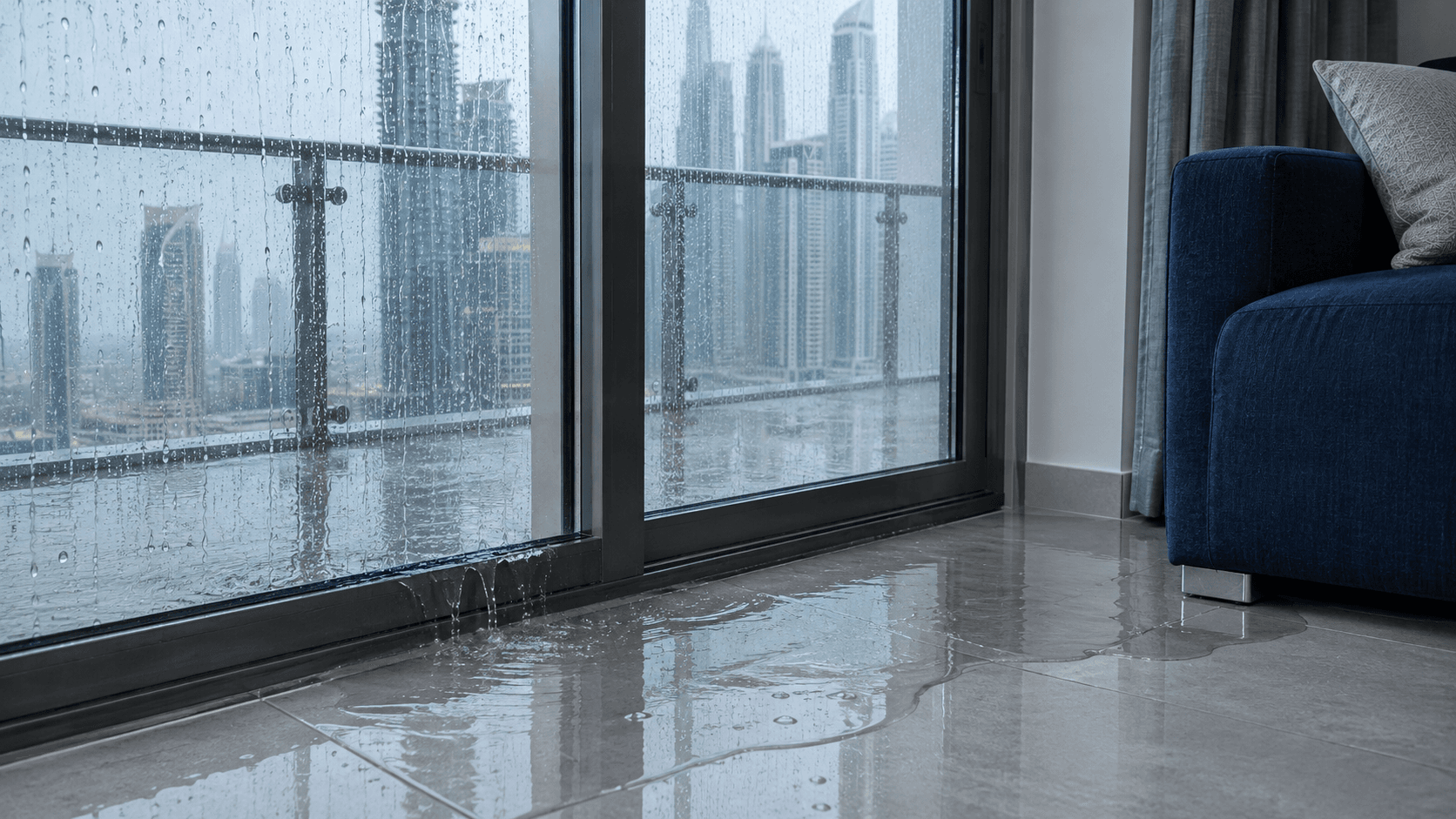
What should I do while rainwater is coming in?
Put safety before photographs or saving furniture. Keep people away from wet electrical equipment and flooded areas. Do not touch wet sockets, use soaked appliances or attempt electrical repairs yourself. Contact building security and maintenance immediately; leave an unsafe area and follow emergency instructions.
If safe, move belongings away from the water and close windows and balcony doors. Do not climb outside to reach a leak.
DEWA's rainy-season guidance advises using qualified technicians and checking electrical equipment after water exposure. A floor looking dry does not prove the electrics are safe.
Should I contact the landlord or building management?
Contact both, in writing as well as by phone. The landlord needs the repair request; building management may need to inspect the outside of the building or shared systems.
Send the time, affected rooms, safe photographs and a description of where water appears to enter. Ask for a reference number, an inspection and an urgent plan.
Message to adapt: "Heavy rain is entering through [location] and affecting [rooms/items]. Photos are attached. Please arrange an urgent inspection, confirm any safety precautions and tell me who will organise the repairs. I can provide access at [times]."
This initial request does not replace any formal notice required for a claim.
Who pays to repair leaking windows, ceilings or walls?
Start with the lease and the diagnosis. Article 16 of Dubai's tenancy law places maintenance affecting use of the property with the landlord unless the parties agreed otherwise. Article 17 addresses defects and damage not attributable to the tenant.
Ask the contractor to identify the cause, not just repaint the stain. Failed seals, defective waterproofing and a blocked drain require different work. Separate stopping water entry from drying, electrical checks and restoring damaged finishes.
A clause about minor maintenance does not, by itself, explain who must repair the building's exterior.
What if the problem comes from the roof or outside the building?
Ask the landlord to involve building management. Under Dubai's jointly owned property law, roofs and exterior walls are common parts. External-wall windows are also included unless the site plan provides otherwise. The building's registered arrangements matter.
Request a written assessment identifying the affected part, responsible maintenance team and repair plan. Keep the landlord copied even when management handles the contractor. Do not accept repeated redirection between them as a substitute for a recorded response.
Do not authorise alterations to shared waterproofing or drainage yourself.
Can the landlord dismiss the problem because it was heavy rain?
The weather alone does not establish who is responsible. A maintenance defect, tenant conduct and exceptional weather can produce different outcomes. Ask for the technical evidence behind any refusal.
Fictional example 1: Rain enters through a closed window with a failed seal previously reported to the landlord. Earlier messages and the inspection report help establish whether an unresolved defect contributed to the damage.
Fictional example 2: A balcony door was left open during heavy rain, with no defect identified. That may change responsibility. The same wet floor does not mean the same legal outcome.
Neither example guarantees compensation or proves that the tenant must pay.
Who pays for my damaged sofa, laptop or other belongings?
List damage to belongings separately from building repairs. Identify each damaged item, its condition before the incident, evidence of its value and how the rainwater damaged it. Keep purchase records, photographs and repair assessments where available.
You may have an insurance claim or a claim against a responsible party, depending on the evidence. A leaking apartment does not automatically entitle you to new replacements at the landlord's expense.
Ask the insurer about inspection and disposal before throwing items away, where safe. Explain any urgent disposal needed for safety and retain evidence.
Does the building's insurance cover my possessions?
Do not assume it does. Building insurance and your contents cover are different. Article 41 of the jointly owned property law addresses building and liability insurance; it does not establish automatic payment for every tenant's personal items.
Ask management which insurer should receive the incident report. If you have contents insurance, notify your insurer promptly and check storm cover, exclusions, claim limits and the excess, meaning the part you pay yourself.
For example, GIG Gulf's published Home Comfort wording treats storm damage inside the home differently from contents left outdoors. This illustrates why the exact policy matters; it is not a promise about your cover.
Can I book a hotel and make the landlord pay?
Reimbursement is not automatic. If remaining in the apartment is unsafe, prioritise a safe place to stay. Tell the landlord and insurer immediately and request written confirmation of any approved accommodation, daily limit and duration.
Keep the inspection report explaining why the home cannot be occupied, plus reasonable accommodation receipts. An insurer may provide temporary-accommodation cover after an insured event, subject to its terms. The example policy contains such conditions.
Leaving for safety does not itself settle who pays the hotel bill or whether rent remains payable.
Can I pay for repairs and deduct them from rent?
Do not make an unagreed deduction and assume it is lawful. First seek written approval covering the work, contractor, cost and reimbursement.
RDC's maintenance guidance identifies possible remedies when required maintenance is neglected, including repairs, rent reduction or termination. The available remedy and procedure depend on the case; the guidance is not blanket permission to stop paying.
The current federal law also provides a conditional route for urgent or minor repairs without prior court permission. Have its notice requirements and application to your Dubai tenancy checked before deducting anything. Record the urgency, contact attempts and invoices.
Can I end the tenancy if the apartment keeps flooding?
Repeated serious leaks may justify seeking a remedy, but they do not automatically cancel the lease. Ask for a durable repair and document previous incidents, unavailable rooms and inspection findings.
Consider a written agreement ending the tenancy, or ask about the appropriate RDC claim. Settle the final rent date, unused prepaid rent, deposit, cheques and handover in writing. Moving out without resolving these can leave a dispute continuing.
If you would like to know more about an agreed early exit, see reducing or avoiding a tenancy cancellation penalty.
Where can I complain if nobody deals with the leak?
Use the route that matches the problem. Dubai Municipality asks residents to report rainwater accumulation and related emergencies through 800900. That safety or drainage report is separate from a claim for money.
For a landlord-tenant dispute, RDC offers amicable settlement and a first-instance rental claim. A dispute against building management may require a different case category. Check the correct respondent, request and fee before filing.
Prepare the lease, Ejari, attached terms, correspondence, reports, photographs and loss records. RDC requires filing documents in Arabic or legally translated into Arabic. Fees apply; filing does not guarantee compensation.
What should I check before the next heavy rain?
Ask for prevention, not only cosmetic repairs. Request checks of window seals, balcony drainage, waterproofing and any previously affected electrical equipment.
Dubai Municipality advises keeping rainwater drains clear and functioning. Arrange safe maintenance; do not climb onto roofs or dismantle shared systems yourself. Keep windows closed when appropriate and move vulnerable belongings away from a known leak while repairs are pending.
Keep before-and-after photographs and written completion records. If storm damage is later deducted from your deposit, our guide to rental deposit disputes explains how to challenge the account.
Official sources checked 15 November 2026. General information for the stated Dubai scope; the contract, cause, evidence and applicable law determine each case. Both examples are fictional. Insurance wording is an example, not a product recommendation or confirmation of cover.