
Practical guide · UAE
My new apartment has defects. Should I accept handover?
Do not sign a statement saying the apartment is defect-free when it is not. Inspect it, record the problems and ask for a written repair plan. Minor finishing defects and problems affecting safe use need different responses. Whether you can delay handover or payment depends on your contract and the applicable law.
This guide is for buyers taking a new apartment from a developer. The practical checklist is useful across the UAE; the legal sections distinguish Dubai and Abu Dhabi. Other emirates and special jurisdictions need their own checks.
What should I do before deciding whether to accept?
Read the handover documents and inspect the apartment first. Find your sale and purchase agreement, often called the SPA, the specifications, payment schedule and handover notice.
Check what you are being asked to sign. Receiving keys, confirming an inspection and agreeing that all work is complete are different statements. Ask for a copy of every form before the appointment, especially anything saying you have no outstanding claims.
Write down the handover and payment deadlines. If you disagree with the condition, respond in writing before those deadlines and explain the specific problems. Do not assume silence or missing the appointment protects your position.
What is snagging, and what should I check?
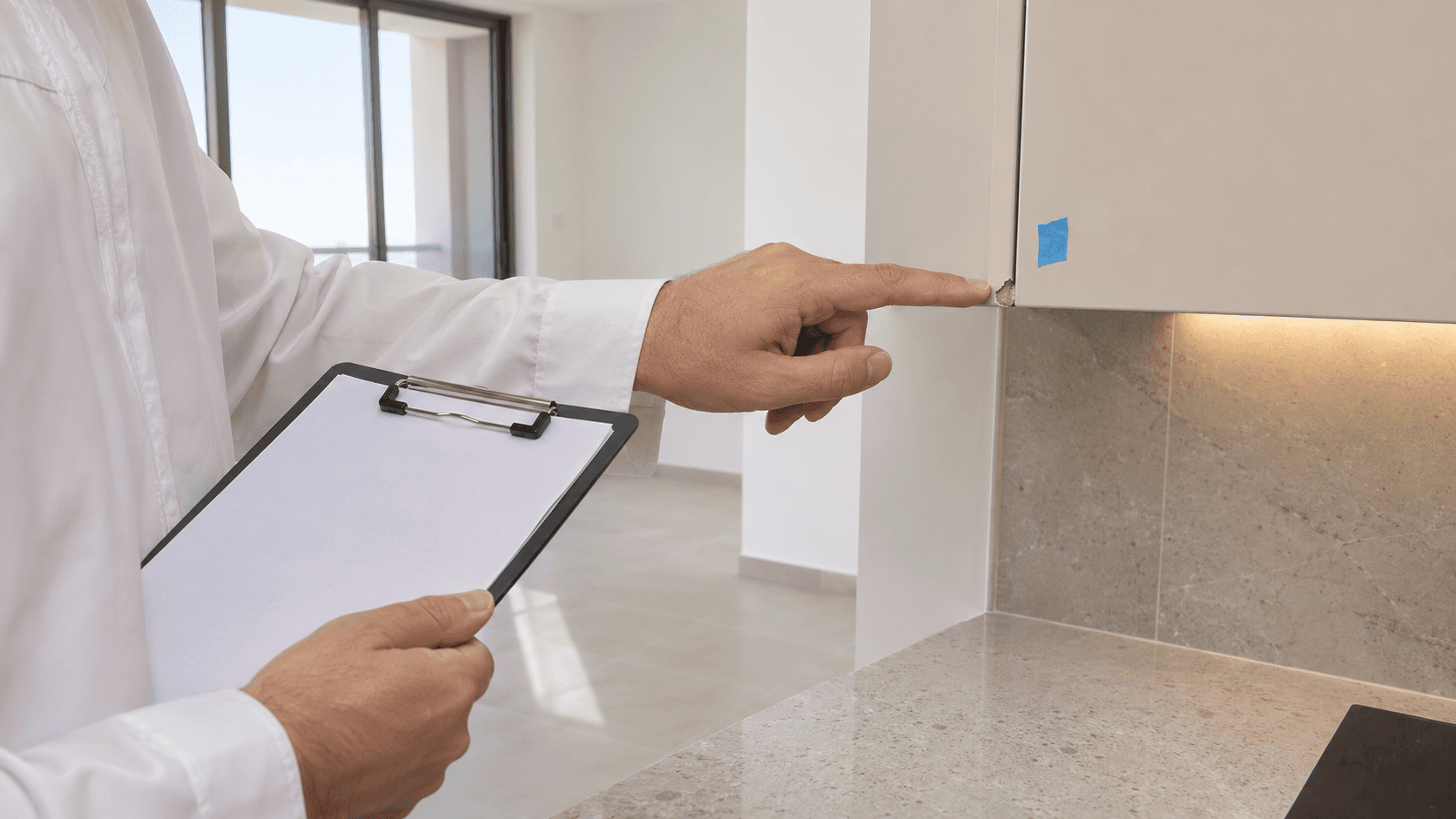
Snagging means inspecting the apartment and listing defects for correction. Work room by room, comparing the apartment with the agreed specifications.
- Check walls, ceilings, tiles, cupboards, doors and windows for damage or poor fitting.
- Test taps, drainage, toilets and accessible fittings; look for leaks or damp patches.
- Check whether the AC operates and report unusual noise, weak cooling or water dripping.
- Ask for qualified testing of electrical and safety concerns. Do not open electrical equipment yourself.
- Record anything that could not be tested because water, power or access was unavailable.
Consider an independent qualified inspector, particularly for leaks, suspected structural problems or technical systems. Confirm access arrangements with the developer first. An inspection report identifies concerns; it does not itself decide your contractual right to refuse handover.
Are small finishing defects a reason to refuse everything?
Not automatically. A small paint mark and an unsafe electrical installation are not the same problem. For minor items, discuss whether handover can proceed with the defects recorded and a clear repair arrangement. Get advice if the paperwork conflicts with that arrangement.
Example case 1 — finishing defects: In this fictional example, a buyer finds chipped cupboard paint and a loose door handle. The buyer photographs both, adds them to the inspection list and asks the developer to acknowledge the list and confirm repair dates.
The buyer should not sign that these items are already repaired. Before accepting, they also check how the repair team will gain access after furniture arrives. The important result is a documented plan, not a verbal promise to “fix everything later”.
What if there is a serious leak or a safety concern?
Get the problem assessed before moving in. Ask the developer to investigate the cause, explain the proposed repair and arrange a further inspection. Avoid using an area or system that may be unsafe.
Example case 2 — water near electrical fittings: In this fictional example, a buyer notices water leaking through a ceiling close to a light fitting. The buyer records it from a safe position and requests an urgent technical assessment rather than accepting a paint touch-up as a complete repair.
Ask a property lawyer to review the contract before formally refusing handover or withholding money. The seriousness of the defect, evidence and contract matter. A visible crack is a reason to seek an assessment, not enough on its own to declare the building structurally unsafe.
Can I accept the keys and still ask for repairs?
Taking the keys does not automatically end every developer obligation. However, the wording of the documents still matters. Ask for outstanding defects to be identified in the handover record and for written acknowledgement that repairs remain outstanding.
Avoid signing an inaccurate “all defects rectified” statement. If the developer will not amend a form, or presents a broad waiver, obtain advice before signing. Adding your own handwritten reservation is not a guaranteed solution to conflicting contract wording.
Keep copies of the signed documents, acknowledged defect list, photographs and correspondence. Make sure you know who will handle repairs after handover and how to obtain a reference number for each report.
How long is the developer responsible in Dubai?
For property covered by Dubai's jointly owned property law, Article 40 distinguishes two periods:
- Ten years from the project's completion certificate: liability to remedy defects in structural parts.
- One year from handover to the buyer: repair or replacement of defective installations, including mechanical, electrical, sanitary and sewerage installations.
There is an important exception: where the buyer refrains from taking possession, the one-year period starts from the project's completion certificate. Refusing the keys does not necessarily stop that clock. Dubai Law No. 6 of 2019, Article 40.
Do not treat this as a one-year guarantee covering every cosmetic issue. Check the defect's classification, contract and any additional warranties. Report problems promptly rather than waiting until the period is nearly over.
Are the dates the same in Abu Dhabi?
No. Do not automatically use the Dubai handover date rule. Article 73 of Abu Dhabi's real estate law provides a ten-year period for the specified structural or common-part defects threatening durability and safety, and one year for defective installations. Both run from the municipality's final completion certificate. Abu Dhabi law, Article 73.
Request the certificate date and the developer's written warranty terms. Where a project falls under a separate legal regime, confirm which rules apply rather than relying only on its emirate or postal address.
What if I discover a defect after moving in?
Report it immediately through the developer's stated channel and keep proof. Include when it appeared, where it is, photographs and how it affects use. Ask for a repair reference, proposed action and appointment.
Example case 3 — a recurring AC leak: In this fictional example, a resident discovers water dripping from an AC vent after moving in. A technician clears it, but the leak returns. The resident keeps both reports and asks for the underlying cause to be investigated, with a reinspection after repair.
Do not mark the issue resolved merely because someone attended. Recheck the affected area and retain the repair record. If urgent work is necessary to prevent further damage, document the situation and seek appropriate advice; reimbursement should not be assumed.
Can I hold back the final payment until everything is fixed?
Do not assume you can deduct repair costs or stop payment yourself. Check the payment and handover provisions and seek advice before missing a due payment. Ask for any agreed postponement or retention of money to be recorded in writing.
Also ask for an itemised final statement. Keep the defect dispute separate from understanding other charges. If you would like to understand ongoing building costs, see our guide to comparing Dubai apartment service charges.
Where can I get help if the developer does not respond?
Start with a formal written escalation to the developer's handover or customer-care team. Attach the defect list, report references and requested action.
In Dubai, ask DLD which route fits the issue. Its real estate company complaint service excludes contractual cancellation, refund and compensation disputes. Do not assume a regulatory complaint can award those remedies; the appropriate judicial route needs checking.
In Abu Dhabi, Taswea's official guidance explains its real estate settlement process, subject to jurisdiction. A settlement request does not guarantee agreement or compensation.
If you are considering another purchase, our blog on checking a Dubai property developer before buying explains the earlier checks. Those checks complement an inspection; they cannot certify the condition of a particular apartment.
What can I write to the developer today?
Use a specific request and attach your evidence:
“Following my inspection on [date], please acknowledge the attached defect list and photographs. Please confirm the repair plan, completion dates and arrangements for reinspection. Please also clarify how outstanding defects will be recorded in the handover documents and whether any handover or payment deadline is being changed by agreement. I need this clarification before confirming the next step.”
Keep private documents and identifying apartment details within the developer's secure correspondence. This message requests clarification; it does not replace a formal legal notice or change a deadline by itself.
Official sources checked on 9 November 2026. Practical guidance for buyers, with separately identified Dubai and Abu Dhabi provisions. Contract terms, defect type and jurisdiction affect the available remedy; an engineer assesses technical defects and a qualified lawyer advises on disputed acceptance, payment or claims.